- 03.06.2026

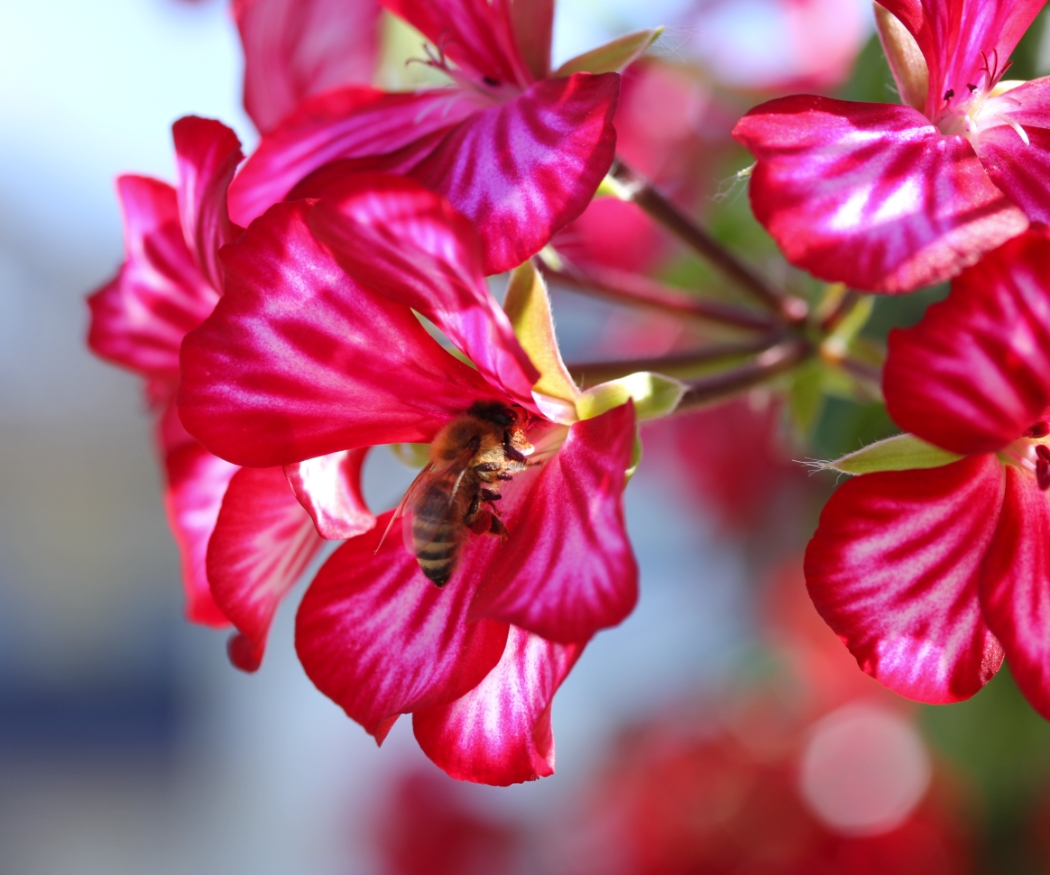
Sustainability is one of the key issues in modern horticulture. In the production of pelargoniums – commonly known as geraniums – there is also an increasing focus on resource-efficient production methods and supply chains. However, there is no simple answer to the question of how sustainable pelargoniums are. The decisive factor is the conditions under which they are grown – and this is precisely where the industry has made significant progress in recent years.
The fundamental sustainability issues at stake concern not only geraniums, but the entire ornamental plant sector. Greenhouse production, growing media, water and nutrient management, energy use and plant health management all play a decisive role in determining a crop’s environmental footprint. In the cultivation of pelargoniums, the industry is constantly striving to grow its plants using as few resources as possible. Breeding plays a key role in this, with new varieties becoming increasingly hardy and better adapted to different growing conditions. This enables more efficient use of resources while ensuring consumers receive attractive, long-lasting pelargoniums.
Pelargoniums: Robust growth in favourable conditions
Pelargoniums have characteristics that make them ideal for sustainable cultivation. They are hardy and able to withstand heat and drought, and are distinguished by their exceptionally long flowering period. Compared to some other bedding and balcony plants, they also thrive in moderate temperatures and are relatively tolerant of peat-reduced or peat-free substrates.
These qualities are also important to consumers. They are considered easy-care, versatile summer flowers, suitable for window boxes, containers on balconies and patios, and in garden beds. Thanks to their resilience and prolific flowering, they reliably bloom from spring to autumn, whether grown in urban or rural environments. In increasingly hot cities in particular, heat- and drought-tolerant plants, such as pelargoniums, are well suited to sunny balconies and patios.
These characteristics alone do not make their cultivation sustainable. However, they do create favourable conditions for it.
Focus on production and origin
The sustainability of a crop is largely determined by how it is cultivated. For pelargoniums, factors such as energy consumption in the greenhouse, the substrate used, and the irrigation and fertilisation methods employed all play a crucial role.
Pelargoniums are produced in large quantities, so improvements in these areas can have a significant impact. More efficient greenhouse technology, tailored cultivation methods and new substrate mixtures can help reduce resource consumption and minimise environmental impact.
The location of production is also important. A large proportion of pelargoniums for the European market are grownlocally. Short distances from the grower to the retailer can significantly reduce transport emissions. At the same time, regional production is becoming increasingly important in sales, as many consumers specifically request locally grown plants.
The industry is also internationally connected. Many pelargoniums are propagated from cuttings taken from mother plants in regions with suitable natural climates, such as Kenya or Ethiopia. Studies show that this division of labour does not necessarily result in a worse climate footprint. On the contrary: If mother plants were cultivated in Europe, additional heating and lighting would often be required.
Energy remains the decisive factor
Energy use in greenhouses is a key factor influencing the sustainability of pelargonium cultivation. In the early stages of cultivation in particular, energy is required for heating in order to create optimal growing conditions.
‘Existing life cycle analyses show that production in heated greenhouses causes an average of around 0.7 to 0.8kg of CO₂equivalents per plant,’ explains Professor Paul Lampert from the Erfurt University of Applied Sciences. ‘Over 90 per cent of the climate impact is attributable to fossil fuel heating energy.’ As long as greenhouses remain heated with oil or gas, the energy supply will continue to be the main factor affecting the CO₂ balance of production.
Is CO₂ correct here? Or should it be CO₂e? CO₂ only measures carbon dioxide, while CO₂e is a universal unit of measurement used to express the climate impact of ALL greenhouse gases combined (such as methane and nitrous oxide), standardised to have the same warming effect as CO₂.
Alternative energy sources are becoming increasingly important for many nurseries, for environmental and economic reasons. Many producers are now relying on biomass, geothermal energy, district heating or industrial waste heat.
Changing substrates
Besides energy consumption, the substrate is becoming an increasingly important focus of the sustainability debate. Many pelargonium cultivation methods traditionally use peat-based mixtures because peat has excellent physical and microbiological properties: it retains water, ensures a stable root zone structure and enables consistent nutrient supply.
However, peat is facing increasing ecological criticism. Large quantities of stored carbon are released during extraction, and valuable peatland habitats are lost. Against this backdrop, many European countries are pursuing strategies to gradually reduce their use of peat in horticulture and replace it with alternative substrate materials.
Consequently, the industry is working intensively to make greater use of alternative raw materials. Wood fibres, compost, bark humus and coconut materials are now components of many modern substrate mixtures. ‘Practical tests show that peat-reduced and, in some cases, even peat-free substrates can be used for growing pelargoniums, provided the formula and cultivation methods are precisely tailored,’ explains Philip Testroet, Deputy Managing Director of Industrieverband Garten (IVG), the German horticultural industry association. A balanced mix of the individual components is crucial. This ensures good structure, adequate water retention and an appropriate nutrient supply.
Pelargoniums are relatively tolerant of peat-reduced substrates, which is advantageous for developing more sustainable mixtures for both professional cultivation and home gardens. At the same time, life cycle analyses show that substrates have a significantly lower impact on the climate footprint of production than energy consumption in greenhouses, a point also emphasised by Prof. Lampert.
Efficient water and nutrient management
Switching to alternative substrates requires adjustments to cultivation practices. Irrigation and nutrient supply play a crucial role in this process. There have also been significant developments in production in this area in recent years. Modern greenhouse operations increasingly rely on precise systems, such as ebb-and-flow tables or drip irrigation. Some also collect rainwater from greenhouse roofs and use it for irrigation.
In many ornamental plant nurseries, excess irrigation water and nutrient solutions are collected and reused. This significantly reduces water loss and nutrient runoff. From a scientific perspective, water is therefore not considered a dominant environmental factor in modern production systems – a view endorsed by Prof. Lampert.
In plant health management, the industry is also increasingly relying on integrated strategies and the targeted use of beneficial organisms to minimise the use of chemical pesticides.
Collating and sharing knowledge
To highlight current developments in sustainable production methods, the industry campaigns Pelargonium for Europe (PfE) and Stars for Europe (SfE) – a sister organisation dedicated to poinsettias – have created an online sustainability database for ornamental plant cultivation at https://pfe-trade.com/sustainability. The platform is for producers, suppliers and trade media, among others. It compiles articles, best practices and background information from international industry publications, organised thematically. Article summaries provide a quick overview, while the original full-text versions can be accessed directly via links on the respective specialist portals.
The content covers key sustainability topics such as energy, substrates, water, packaging, plant health management and breeding, as well as social and organisational aspects such as working conditions, certification and industry collaboration. The goal is to make existing knowledge from research, practice and trade media accessible in one place, and to promote the exchange of information on sustainable production methods in European ornamental plant cultivation.
Reprint of this article is free of charge with clear attribution to “Pelargonium for Europe”, and a copy of any publication made.